
Building beats watching
Children understand ideas best when they build and test something real. Seymour Papert showed this at MIT with the LOGO turtle — the foundation of learning to code through play.
Papert, Mindstorms · MIT, 1980
The voice-first software game
A voice-first game that teaches kids to build with software.
A game where kids learn how software works by giving instructions, testing ideas, and debugging through play.
Voice in. Game on.
Children already know how to imagine, explain, and ask “what if?” Playkind turns those natural skills into a way to explore instructions, logic, and software thinking.
No keyboard at the starting line. Just an idea and something to make happen.
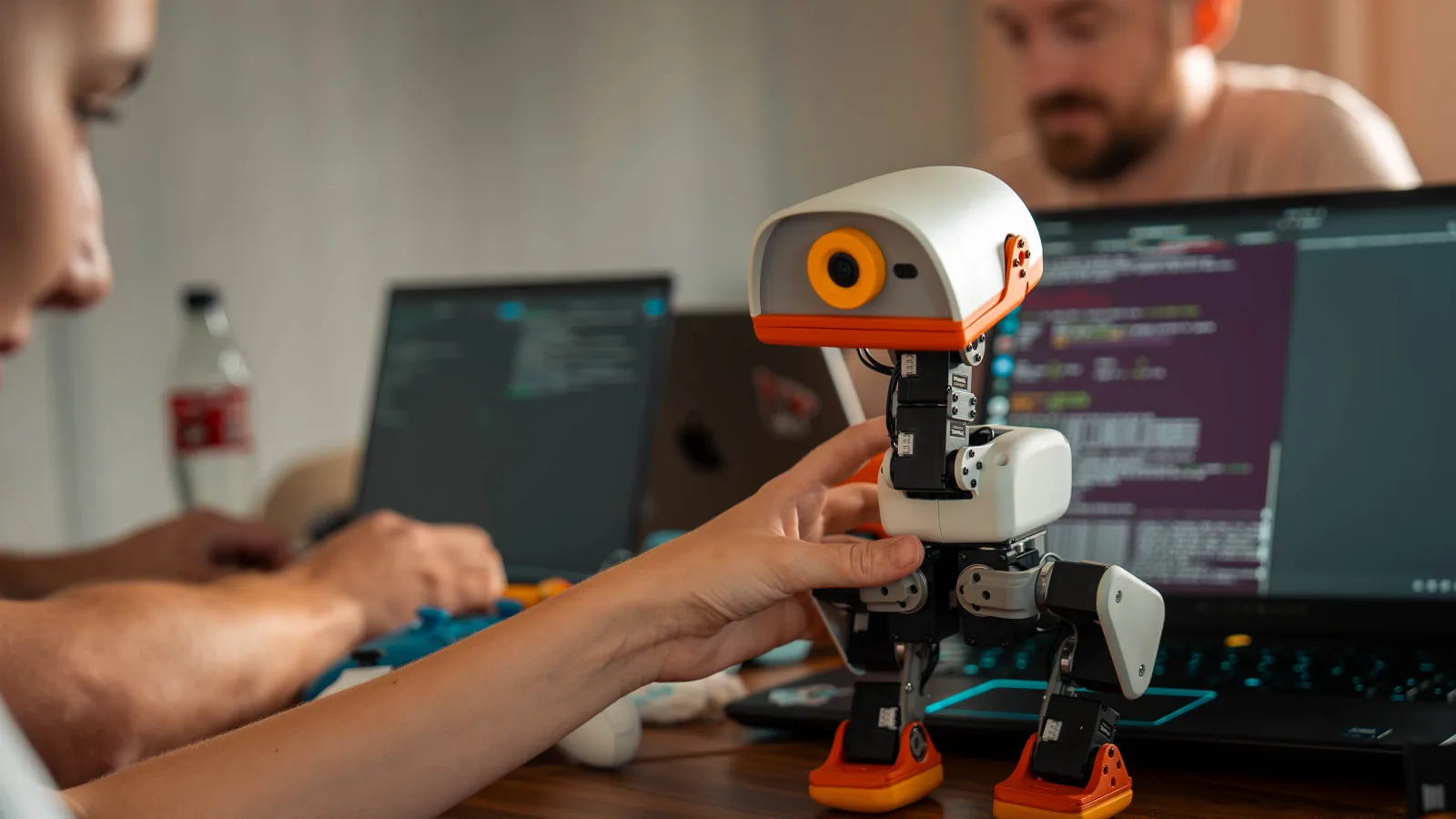 Live mission
“Make the light blink twice.”
From idea to action
Give the game an instruction in your own words.
See how the game interprets your idea.
Notice when the result is different from what you expected.
Improve the instruction and run it once more.
The logic behind the play
Put instructions in the right order.
Decide what should happen when something changes.
Make useful actions repeat.
Find what went wrong and improve the result.
Try. Fail. Laugh. Improve.
Playkind makes abstract ideas visible. Every command changes the game, every surprise becomes a clue, and every retry builds a better mental model.
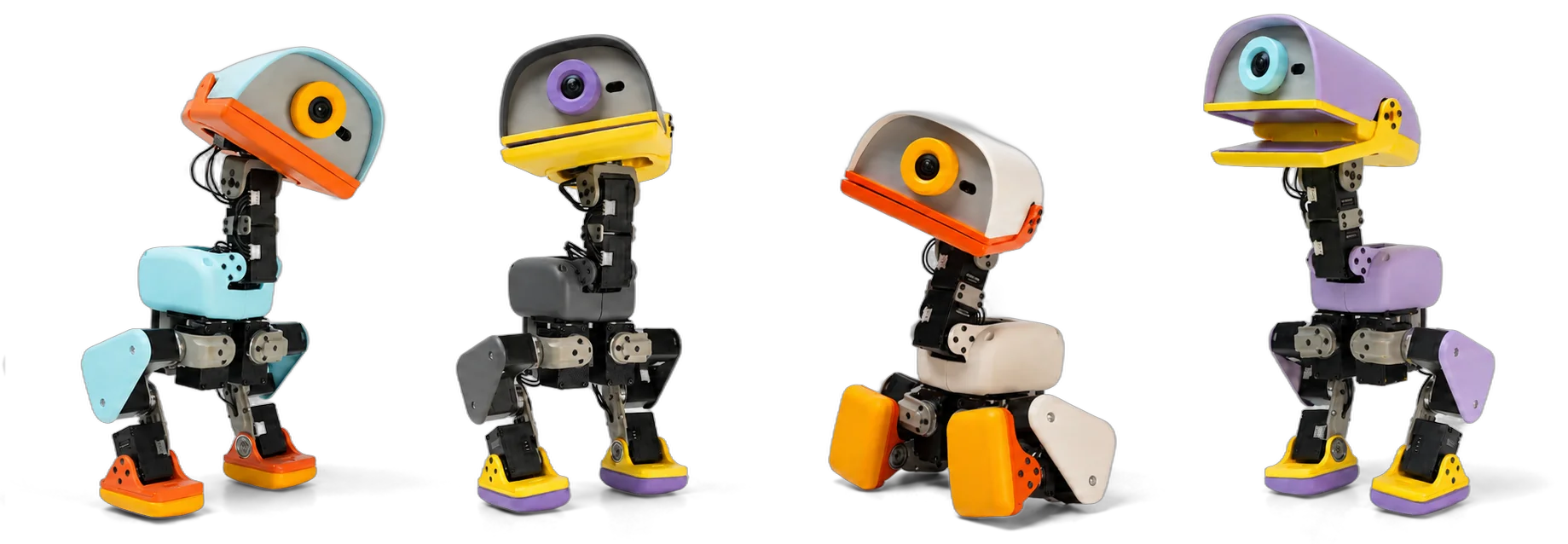
“Always jump over the red block.”
“If the door is locked, knock.”
“Wait, that turn was too early.”
“Repeat it until the bridge is done.”
More than a voice command
Playkind asks useful questions, shows what changed, and gives players space to try again. The goal is not to guess the perfect phrase. The goal is to understand why something happened.
“What should happen next?”
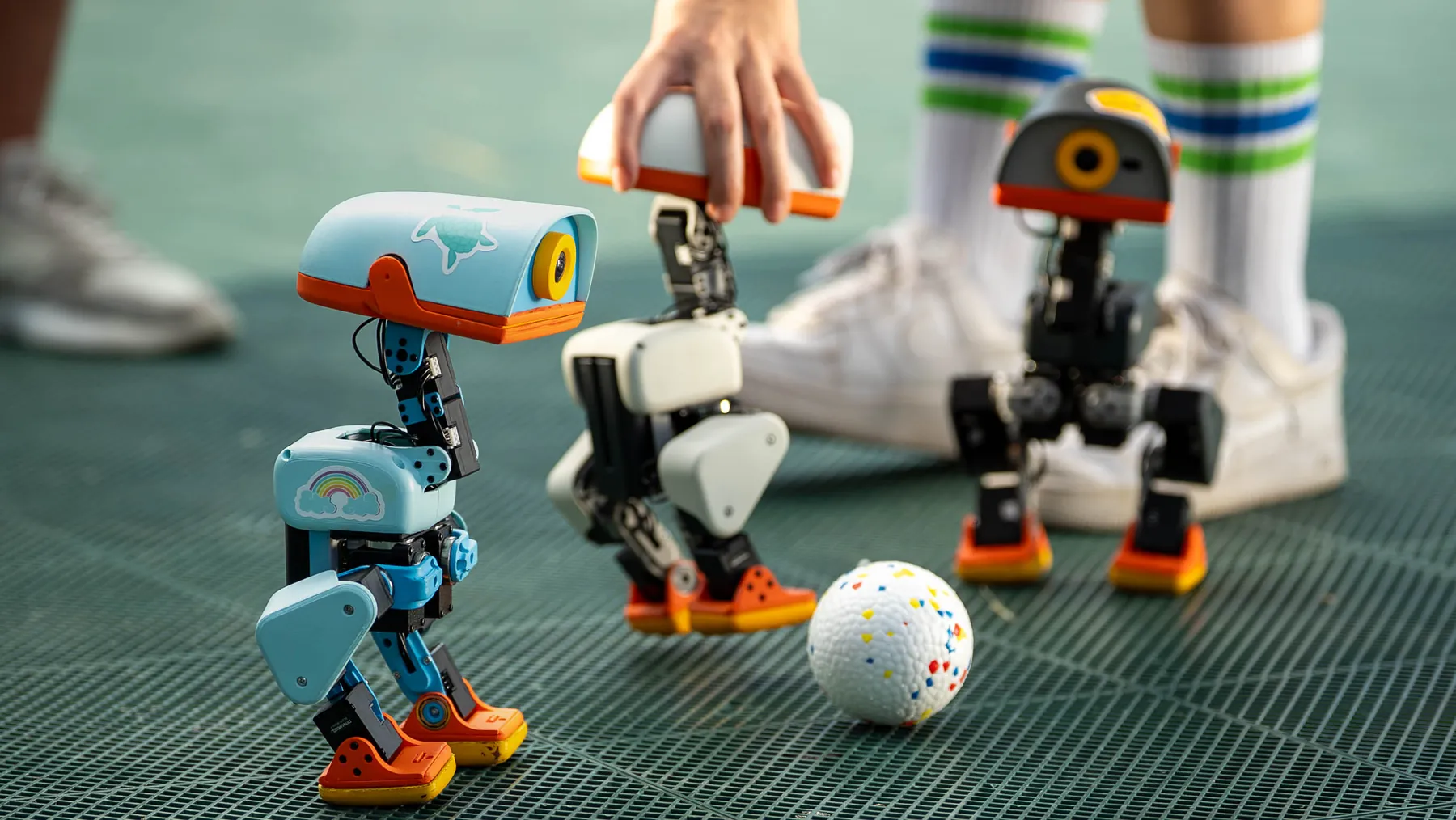 Ages 7–12
Short missions. Clear progress. No syntax, no pressure.
For curious kids and thoughtful parents
Playkind turns children from passive users into active problem-solvers. They practise breaking ideas into steps, predicting outcomes, testing rules, and learning from mistakes.
The interface stays playful. The thinking underneath becomes more powerful with every mission.
Science-driven
No screen. A robot in the room. Your voice as the controller. That design comes from decades of learning research — not from a trend.
Children understand ideas best when they build and test something real. Seymour Papert showed this at MIT with the LOGO turtle — the foundation of learning to code through play.
Papert, Mindstorms · MIT, 1980
Studies with the screen-free KIBO robot show children as young as five learning sequencing and other programming concepts through tangible play — no display needed.
Sullivan & Bers · Tufts University, 2016
Learners who practised with a physically present robot made significantly larger gains than learners taught by the same tutor on a screen.
Leyzberg et al. · Yale University, 2012
Explaining your own reasoning — exactly what a voice game asks for — is one of the best-documented ways to understand something more deeply.
Chi et al., the self-explanation effect · 1994
Playkind turns that research into missions: say it, watch it run, find the problem, fix it.
Turn an idea into clear steps.
Understand why actions produce results.
Change one thing and test again.
Learn that mistakes are part of building.
Your first idea is enough.
Start with one sentence. See what happens. Then make it better.